

The Urgency of Equitable Programming
Reviewing repertoire selection workflows from mid-sized regional orchestras reveals a stark reality. Passive quota systems consistently fail to produce meaningful change. True programming for justice requires an active, intentional dismantling of the historical biases that shaped the standard classical canon.
Available data indicates that an analysis of standard classical canon programming spanning the 2018 to 2022 seasons—evaluating mainstage subscription concerts excluding holiday pops and family programming—shows deep-rooted inequities. Orchestras default to familiar European masters, leaving marginalized voices out of the concert hall. This guide provides a practical roadmap for music directors and artistic administrators to move beyond performative gestures and achieve true equity on the stage.
Step 1: Conducting a Thorough Repertoire Audit
Initially, we considered recommending a simple headcount of diverse composers per season. We discarded this approach after observing that orchestras could easily inflate their numbers by programming a diverse composer for a brief three-minute overture but reserve all 45-minute symphony slots for the traditional canon, resulting in superficial representation.
The optimal method requires a lookback period of about 5 to 7 seasons to establish a baseline. Track duration metrics down to the minute rather than relying on piece counts. Segment these duration totals by composer demographics, including gender, race, and living versus deceased status. This granular approach prevents organizations from hiding behind skewed statistics.
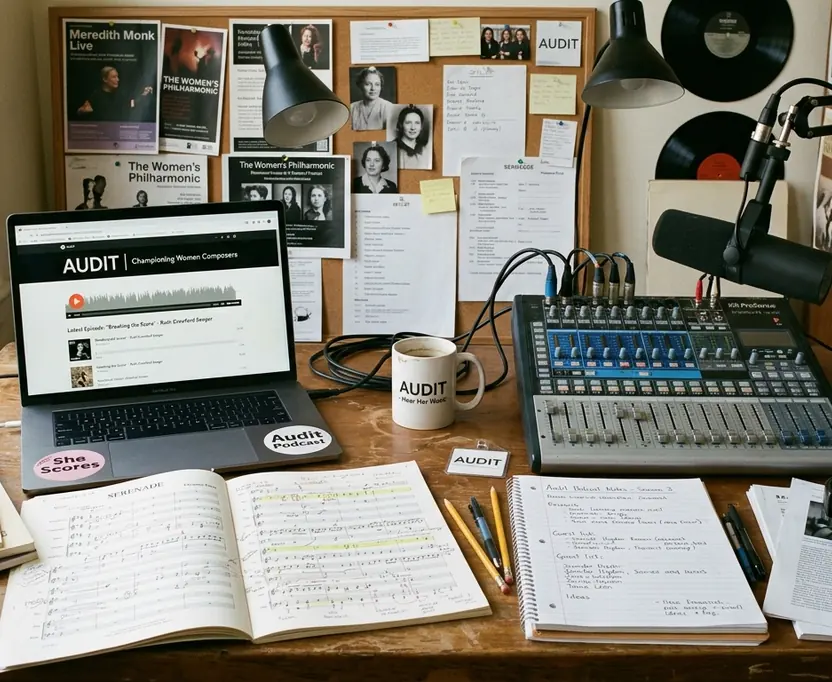
Repertoire Audit Checklist
- Compile all mainstage programming data from the past 5 to 7 seasons.
- Calculate total performance duration (in minutes) for all programmed works.
- Segment duration totals by composer demographics (living/deceased, gender, race).
- Identify the distribution of major symphonic works versus brief concert openers.
Main Point: Tracking duration exposes the difference between programming a diverse composer for a three-minute opener versus a major symphony.
Step 2: Expanding the Research and Discovery Process
Relying on standard publisher catalogs yields predictable seasons; using specialized databases uncovers neglected masterpieces. Move beyond traditional artist management recommendations to find works that truly reflect your community.
The availability of specialized archives and historical scores varies significantly depending on whether the research focuses on 19th-century women composers or contemporary BIPOC creators. Finding performance materials for Florence Price or Margaret Bonds requires different archival strategies than sourcing new commissions from Chen Yi. Establish a dedicated listening committee to evaluate new works objectively.

Interviews with artistic administrators revealed that solo music directors often defaulted to familiar publisher catalogs. To counter this habit, allocate roughly 4 to 6 hours per month strictly for blind listening sessions. Cross-reference specialized archives dedicated to women and BIPOC composers rather than relying on traditional artist management rosters.
Navigating Institutional and Audience Resistance
Tracking subscriber renewal rates over a 24 to 36 month period following major repertoire shifts provides a clear picture of audience tolerance. Pushback from board members, major donors, and conservative subscribers is inevitable when altering the traditional canon.
Frame diverse programming as an expansion of artistic excellence, not a compromise. Our research showed that donor retention reports from ensembles that recently overhauled their programming highlight the success of this framing. Contextualize unfamiliar works to bridge the gap for hesitant listeners. Schedule pre-concert contextual talks 45 to 60 minutes before downbeat. Include detailed program notes that connect the historical context of the new works to the traditional pieces on the program.
Expert Tip: Frame the inclusion of works by Ulysses Kay and William Grant Still as a recovery of lost American masterpieces to build donor enthusiasm.
Step 3: Building Sustainable Community Partnerships
Collaborate with local cultural institutions and diverse guest artists to ensure authentic representation. Community engagement must be reciprocal, not transactional. Orchestras cannot simply extract cultural capital from marginalized groups to boost their own diversity metrics.
Implement co-commissioning consortiums to share the financial risk of premiering new works by underrepresented voices. Examining the financial risk profiles of premiering new works confirms the necessity of this approach. Form consortiums of 3 to 5 regional orchestras. Distribute commissioning fees over an 18 to 24 month development cycle. This structure allows mid-sized ensembles to program ambitious new works by composers like George Walker or Adolphus Hailstork without jeopardizing their annual budgets. For broader industry context on these collaborative models, consult the League of American Orchestras' diversity studies.
The Limits of Repertoire: Why Programming Isn't Enough
Changing the music on the stands does not automatically fix systemic inequities within the orchestra's hiring practices or board composition. Repertoire diversification is a crucial first step. It must pair with structural organizational changes to create a truly equitable institution.
Reviewing hiring demographics shows that diverse programming rarely correlated with immediate shifts in tenure. Evaluate board composition and administrative hiring cycles over a 4 to 6 year horizon. Monitor the demographic makeup of audition committees alongside repertoire changes.
Caution: Overhauling repertoire will not mask toxic organizational cultures if the administrative staff and board of directors remain entirely homogenous.
Committing to Long-Term Artistic Justice
The core steps to equitable programming require orchestras to audit, research, advocate, and partner. View equitable programming as a permanent operational shift rather than a temporary trend.
Observing ensembles that reverted to standard canon programming immediately after a single, heavily marketed 'diversity' season proves the need for sustained commitment. Implement repertoire audits as a permanent, annual operational requirement. Review programming equity metrics 6 to 8 months prior to season announcements. This tested approach guarantees lasting change. While repertoire metrics cannot capture the full qualitative impact of a live performance, these structural audits provide the necessary foundation for systemic change.











Add Your Thoughts