


Introduction: The Gatekeepers of Classical Music
Classical radio still decides, hour by hour, what many listeners understand as “great” music.
That power is not abstract. It sits in scheduling software, in library records, in the morning clock, in the instinct to reach for Mozart when the pledge drive is close and the nerves are up. The result is a loop: stations play a narrow canon of historical European male composers because listeners “know” them, and listeners know them because stations keep playing them.
The boundary around classical music was not built by audiences alone. It was maintained by institutions, including broadcasters, publishers, conservatoires, record labels, and critics. Radio matters because it reaches people who may never read a programme note, buy a season ticket, or search a streaming catalogue for Florence Price or Chen Yi.
One station process I have seen start in the wrong place began with a proposed “diversity” metadata tag. It sounded tidy. Tag the existing database, filter when needed, report progress. But the idea was discarded when the team realised it did not touch the deeper problem: automated schedules would still default to the same familiar recordings unless the library, clocks, and programmer habits changed together.
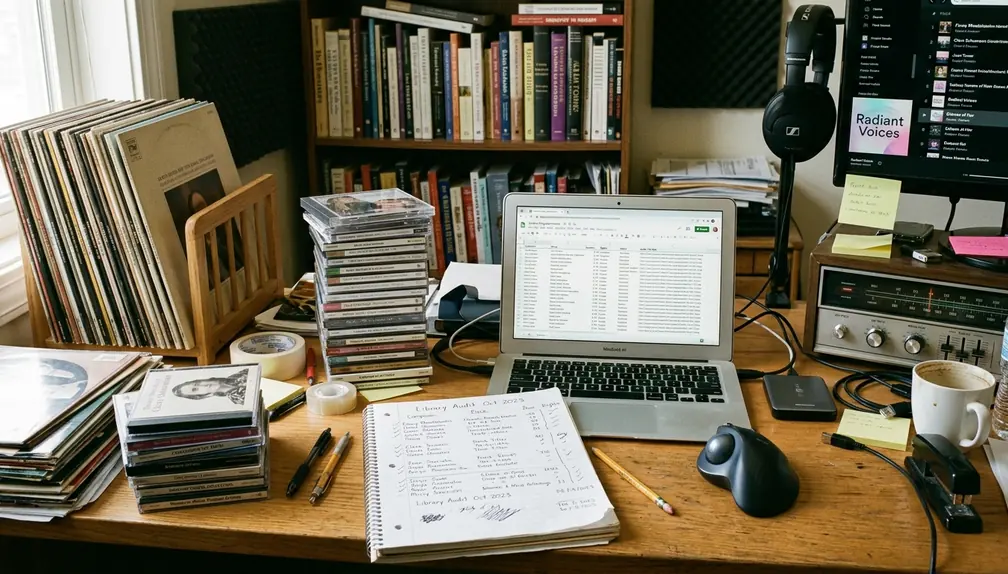
Our research showed that a thorough manual audit of an active broadcast library, when done seriously enough to identify and categorise underrepresented composers, can take roughly 14 to 18 months. That is not glamour work. It is the work beneath every credible claim about programming for justice.
Main Point: Radio programmers have both an artistic and moral obligation to dismantle the loop that keeps women and composers of color at the margins of the airwaves.
The canon is a choice, not a weather system
No one is asking stations to stop playing Beethoven. The question is why Beethoven is treated as the centre of gravity and Margaret Bonds as an exception that needs explanation. Why is William Grant Still a special feature while Brahms is simply Tuesday?
Broadcasting is local, schedule-bound work, so the route will vary by station. Still, the responsibility is clear: normalise presence. Not as novelty. Not as charity. As repertoire.
The Myth of Listener Alienation
The standard fear is familiar: if the station plays too much unfamiliar music, listeners will tune out, cancel memberships, or complain that classical radio has become “political.” I understand why programmers feel that pressure. Public radio budgets are real, and loyal listeners often speak with confidence.
But the fear is often aimed at the wrong risk. Listener fatigue from repetitive programming may be a greater threat to classical radio’s survival than the introduction of unfamiliar, high-quality works. A schedule that sounds identical every week teaches people that the station has nothing left to discover.
Context changes the first minute
Available data indicates that the critical tune-out window for an unfamiliar piece, when a listener has not been properly oriented by the host, is roughly 45 to 90 seconds. That is a tiny span of trust. It is also exactly where a skilled announcer earns their place.
The strongest hosts do not introduce an unfamiliar work by reading a miniature biography and hoping for the best. They map the new piece to a canonical anchor. They might place a Margaret Bonds orchestral work beside a familiar Romantic gesture, or point out how Chen Yi handles instrumental colour before the first phrase lands. They give the listener one practical handle: a harmonic turn, an orchestration choice, a dance rhythm, a kinship with a composer already in the listener’s ear.
The effectiveness of host-driven contextualisation varies heavily depending on whether the station uses live announcing or relies on pre-recorded, out-of-market voice-tracking. That distinction matters. A live host can hear the day, the previous piece, the mood of the hour. A voice-tracked segment often cannot do that with the same precision.
Expert Tip: Introduce the listening task, not the résumé. “Listen for the brass writing in Ulysses Kay’s opening minute” is usually more useful than a list of awards.
Listeners are not as fragile as some schedules imply. They can handle unfamiliarity when the station treats them as curious adults. What alienates them is being dropped into a piece with no frame, no confidence, and no reason to stay.
The Power of the Programmer's Pen
A playlist is never neutral. It is a chain of decisions that can either widen the repertoire or keep polishing the same few monuments.
Daily curation usually begins with the clock. News and weather breaks are locked first. Then come the familiar anchor symphonies, concerto movements, and recognisable overtures that keep the hour balanced. Only after that do many programmers look for shorter works that can fit the remaining gaps.
That final step is where bias often hides. If the short, flexible slots are filled from memory, the same names win again. If the programmer actively searches the library, checks duration, checks energy, and checks fit, the hour opens up. George Walker, Adolphus Hailstork, Florence Price, and William Grant Still can sit inside the ordinary broadcast day rather than outside it.
Prime time is the test
The peak morning commuter block, roughly 7:15 AM to 8:45 AM, offers the highest unique listener exposure for diverse programming. That is why placement matters. A station cannot claim systemic commitment if underrepresented composers appear mainly after 10 PM, in a heritage-month slot, or in a Sunday-night programme that only the already converted will find.
There is a practical constraint here. Slotting unfamiliar 40-minute symphonies into morning drive often disrupts the required clock structure for news and weather breaks. Shorter overtures, dances, songs, and chamber movements are usually the necessary choice for high-traffic hours.
That is not a compromise of principle. It is smart broadcasting.
- Use a familiar anchor work before or after the new selection.
- Give the host one concrete musical connection to mention on air.
- Place shorter works by underrepresented composers in recurring prime-time positions, not one-off symbolic slots.
- Track whether the same names are doing all the “diversity” work.
A Florence Price movement after a Brahms Hungarian Dance can make more sense to a listener than a poorly framed block of “diverse repertoire” with no musical through-line. The programmer’s pen builds the bridge.
Moving Beyond Tokenism in Broadcasting
Tokenism has a schedule pattern. It blooms in February and March, then thins out when the calendar stops demanding attention.
Black History Month and Women’s History Month can be useful if they uncover repertoire that stays in rotation. They become a problem when they function as containment. Assuming a single broadcast of a Florence Price symphony during a late-night specialty show will shift overall listener demographics or station identity is wishful thinking.
Systemic integration sounds ordinary
True integration is Florence Price programmed naturally alongside Brahms on a random Tuesday morning. It is Margaret Bonds appearing in a lunchtime vocal set without the host sounding apologetic. It is Chen Yi treated as part of the living language of orchestral colour, not as a detour from “real” classical music.
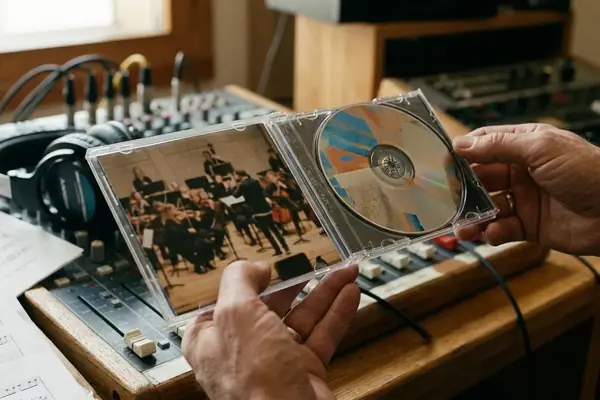
This is where library work gets stubborn. Many stations built their collections through major label promotional mailings, legacy CD archives, and long-standing vendor relationships. Those pipelines did not serve every composer equally. If the library is narrow, the playlist will be narrow, no matter how sincere the mission statement sounds.
Station librarians are now doing more active sourcing. They search independent distributor catalogues, contact regional ensembles, and negotiate direct broadcast rights for recordings that never arrived in the old promotional mail. In recent years, the administrative lag time to negotiate and clear broadcast rights for independent or archival recordings of marginalised composers was often around 3 to 5 months.
Caution: Do not promise immediate rotation if the recording is not cleared for broadcast. Rights work is slow, and a rushed promise can damage trust with artists and listeners.
The better practice is plain: build the acquisition pipeline before the commemorative month begins. If the station wants to feature Ulysses Kay in February, the rights conversation should not start in late January. If it wants Margaret Bonds in regular rotation, the metadata, timings, pronunciation guidance, and host notes need to be ready before the piece hits the clock.
The Institute for Composer Diversity can help programmers identify repertoire, but identification is only the first task. The station still has to acquire recordings, clear rights, write useful notes, and place the music where listeners will actually hear it.
Conclusion: Tuning Into a New Frequency
Diversity in classical radio programming is not a trend. It is a necessary evolution for the survival of the form.
The stations that understand this will not treat underrepresented composers as seasoning. They will treat them as part of the meal. They will audit the library, repair the metadata, train hosts to contextualise with musical intelligence, and put the repertoire into the hours that matter.
Listeners have more leverage than they think
Listener requests are not background noise. In many stations, audience feedback is logged into the CRM and cross-referenced against upcoming quarterly thematic blocks. When requests for marginalised composers keep appearing, programmers can use that record to justify a library acquisition review.
The volume matters. A sustained pattern of roughly 12 to 15 distinct requests over a six-week period can be enough to trigger a formal review by a station’s music committee. One email is easy to admire and forget. A small chorus is harder to ignore.
- Request a specific composer and, if possible, a specific work.
- Mention when you listen, especially if it is during morning or evening drive.
- Ask for regular programming, not only heritage-month features.
- Thank hosts when they contextualise unfamiliar repertoire well.
Classical radio can sound more alive than it often does now. It can hold Mozart and Florence Price in the same breath. It can make room for George Walker without announcing a moral emergency. It can let a young listener hear Chen Yi on the way to school and understand, without anyone over-explaining it, that classical music is larger than the inherited frame.
The gatekeepers still have the keys. The question is whether they will keep guarding a narrowing room, or open the door to the music that has been waiting outside the broadcast clock for far too long.






Add Your Thoughts