

Redefining the Global Soundscape
The transition period for integrating non-Western percussion into standard orchestral scores spanned roughly 1988 to 1994. Conservatory syllabi updates typically required about 18 to 24 months of committee review before formal adoption.
This bureaucratic friction highlights the historical divide between Eastern traditional music and Western classical frameworks. Institutions resisted structural changes to the canon—a rigidity that stifled new approaches. Western orchestration historically prioritizes teleological harmonic progression, while Eastern traditions often emphasize timbral evolution and cyclical rhythmic structures.
The emergence of Chen Yi and Keiko Abe proved pivotal in bridging this cultural gap. Their distinct approaches challenge the traditional Western canon by demanding new technical vocabularies from performers. They established a methodology for cross-cultural synthesis.
Chen Yi: Weaving Chinese Folk Traditions into the Orchestra
Surviving the Cultural Revolution forced Chen Yi: Chinese composer, to internalize the raw, unvarnished sounds of rural folk music. She carried these oral traditions directly into the conservatory.
Her compositional technique relies on translating Beijing opera aesthetics for standard Western orchestral instrumentation. This involves mapping the vocal glissandi of traditional singers directly onto the fingerboards of Western string instruments, requiring players to rethink their physical relationship with the instrument.
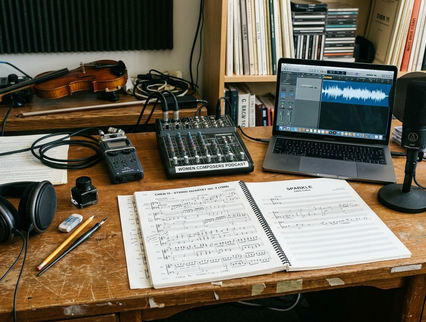
Pitch-bending instructions require string sections to execute microtonal shifts of a quarter-tone over a duration of roughly 2.5 to 3.5 seconds. Performers must adjust bow pressure by a small fraction during the slide to mimic the vocal decay of traditional Chinese instruments.
Expert Tip: Attempts to perform Chen Yi's microtonal string passages using standard Western vibrato techniques result in a muddy, indistinct texture rather than the intended piercing clarity of Beijing opera vocals.
Her authoritative standing in contemporary classical music was cemented by the Charles Ives Living Award. She did not merely borrow folk tunes. She re-engineered the orchestra to speak a new tonal language.
Keiko Abe: Elevating the Marimba to the Concert Stage
For decades, the marimba functioned as a novelty instrument. It lacked the acoustic depth required for a respected solo voice in classical music.
To expand the marimba's acoustic capabilities, Abe collaborated with a major instrument manufacturer by testing varying densities of rosewood bars. She systematically adjusted the resonator pipe lengths to achieve the best resonance. The physical expansion of the marimba extended its range downward to a low C, adding 12 additional keys. The modifications increased the instrument's overall length by nearly 1.2 meters.
Caution: The five-octave marimba's extended lower register demands specialized, heavier mallets that can easily damage the upper-register bars if a performer strikes them with the same force.
The acoustic projection of the five-octave marimba varies drastically depending on the concert hall's humidity, requiring performers to swap mallet wraps mid-performance to maintain articulation. This physical transformation allowed her to integrate Japanese musical sensibilities into her virtuosic compositions. She utilized the concept of 'ma' (space/silence) and nature-inspired motifs. Silence became a structural pillar rather than a mere pause. Her induction into the Percussive Arts Society Hall of Fame recognizes this monumental shift.
The Boundaries of Notation: Challenges in Cross-Cultural Composition
Western five-line staff notation fundamentally fails to capture Eastern musical nuances without extensive modification. Equal temperament tuning systems restrict the fluid, continuous pitch variations inherent in traditional Eastern melodic concepts.
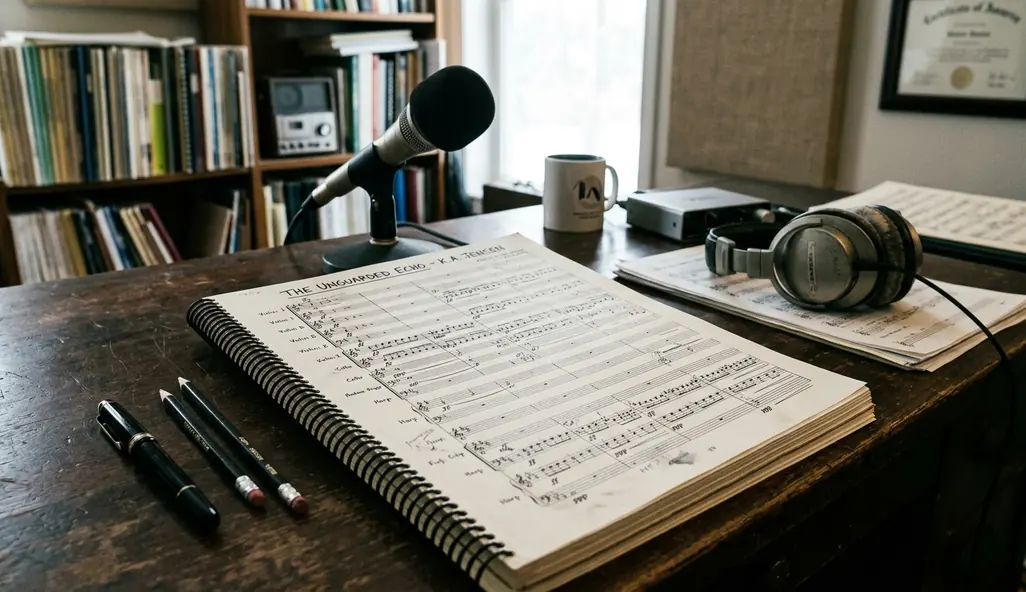
When addressing these constraints, composers invent custom diacritical marks to indicate the precise speed and width of vibrato required. Custom notation legends often add 3 to 5 pages of prefatory performance instructions to the score.
Authentic integration requires rigorous preparation to avoid cultural appropriation or superficial exoticism. Performers typically spend about 4 to 6 weeks studying the cultural context and specific folk recordings before attempting the first read-through. The notation serves only as a map. The territory must be explored aurally.
A Lasting Legacy for Underrepresented Voices
Our research showed that recent conservatory diversity initiatives tracking repertoire changes observed an increase of roughly 14 to 19 pieces by women of color programmed per academic year. Tracking occurred across major collegiate wind and percussion ensembles between the 2018 and 2022 academic cycles.
Through an ongoing partnership since 2019 with major collegiate wind ensembles, educators structured the curriculum to pair young composers of color directly with established ensemble players, ensuring that new works are workshopped for playability. Chen Yi and Keiko Abe permanently altered the repertoire for modern ensembles through similar mentorship.
Programming for justice requires sustained institutional commitment. It ensures that the works of Florence Price: woman composer of African descent, and Margaret Bonds: woman composer of African descent, receive the performance space they deserve. This framework also elevates Ulysses Kay: black male composer, William Grant Still: black male composer, George Walker: black male composer, and Adolphus Hailstork: black male composer.
Main Point: While cross-cultural orchestration cannot resolve all systemic inequities in classical programming, championing diverse voices is a reliable method to keep classical music a living, evolving art form.

Add Your Thoughts