
Reclaiming the History of Classical Music
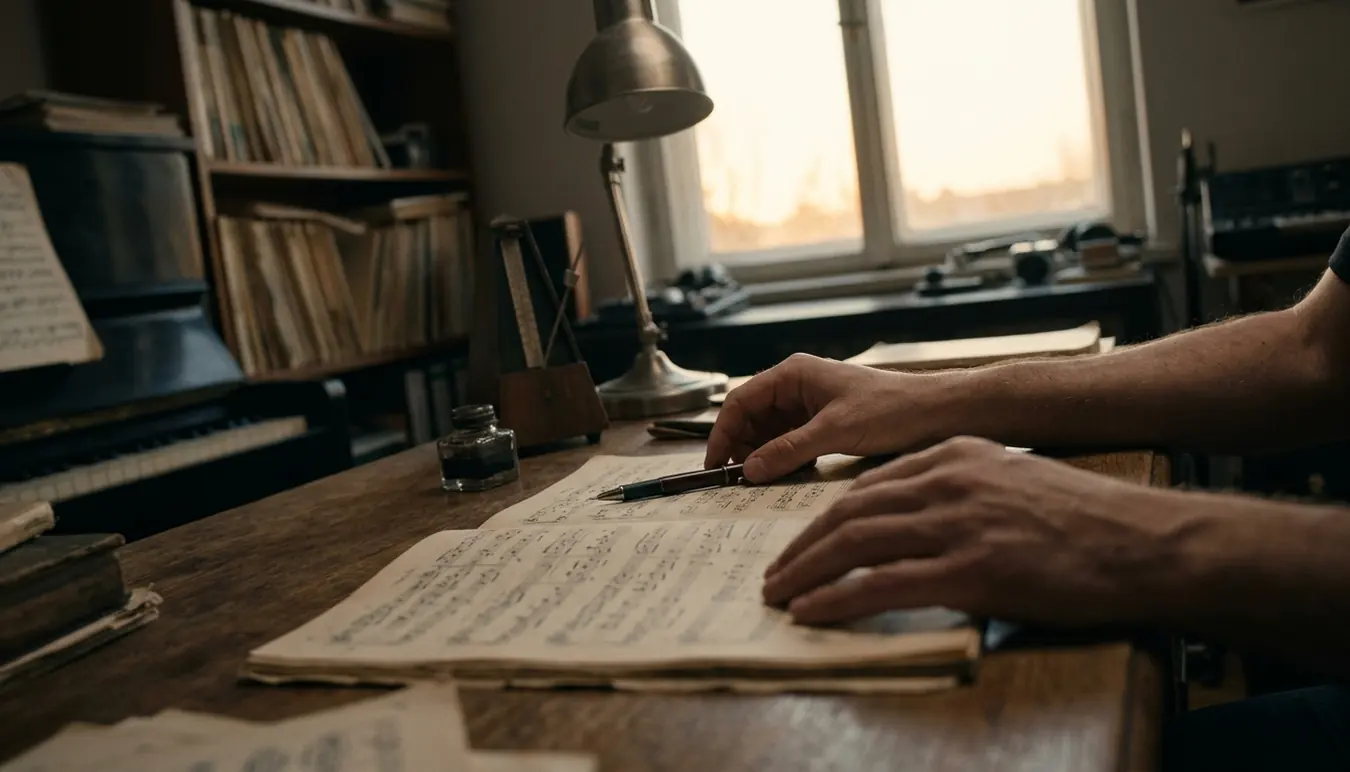
I once began this timeline in the Medieval era because the notation is easier to handle, easier to compare, and easier to defend in a seminar room. That was the tidy solution, but it left the oldest evidence outside the door.
Classical music history has often treated women as interruptions: a gifted abbess here, a court singer there, a published composer who somehow appears fully formed in the seventeenth century. That framing is not neutral. It turns gaps in preservation into gaps in creation, and it makes later exclusion look like historical inevitability rather than archival damage.
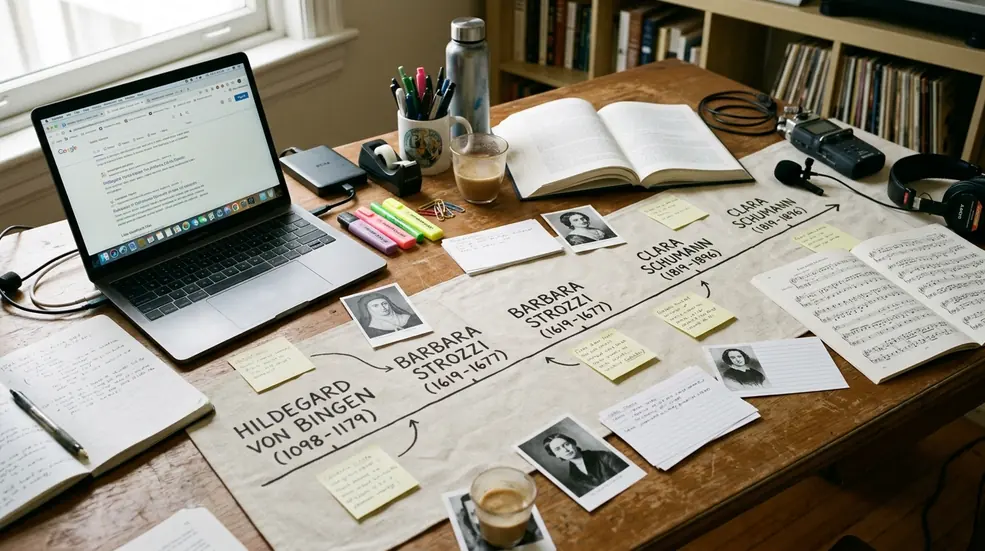
The purpose here is narrower and more useful: to establish a chronological foundation for women who created musical, poetic, liturgical, and performance materials from Antiquity through the Renaissance. I am not using the modern orchestra as the measuring stick. That would misread the period before staff notation, before print culture, and before professional authorship settled into the forms we now recognise.
Women have been creating, writing, adapting, singing, teaching, and innovating in music since Antiquity. The evidence is fragmented, but fragmentation is not absence.
Main Point: A timeline of women composers must begin before the familiar manuscript cultures of medieval Europe, or it repeats the very erasure it aims to correct.
Criteria for Selection and Historical Scope
For this timeline, a composer is not only someone who writes multi-part notation on a staff. In ancient and medieval contexts, the category must include writers of musical texts, creators of liturgical verse, monophonic melodists, chant-makers, and named figures whose work shaped sung performance even when the melody reached us indirectly.
- Temporal scope: Antiquity through the Renaissance.
- Primary evidence: surviving texts, manuscripts, attributions, notated chant, and documented performance contexts.
- Musical scope: sacred and secular materials, with special care around oral traditions.
- Analytical limit: survival does not equal importance; it often reflects institutional power.
Failure to distinguish between oral tradition text-setting and formal staff notation often results in the misclassification and exclusion of early female creators from historical timelines. This is the central technical problem. If the definition is too narrow, Enheduanna disappears; if it is too loose, the term composer loses historical precision.
Surviving manuscripts from the 9th through 14th centuries predominantly reflect monastic environments, skewing the historical record toward liturgical works while secular oral traditions from the same period are largely lost. The survival of musical manuscripts is highly context-dependent, heavily favoring monastic institutions with dedicated scriptoriums over secular court environments. This chronology measures documented survival, not the full density of women's musical labour.
For readers who want to inspect a broader archival frame, the Library of Congress offers helpful context on historical records of early musical manuscripts.
Caution: The definition of composer applied here encompasses text-writers and monophonic melodists, which does not directly translate to the polyphonic, multi-instrumental orchestration standards established in the late Baroque and Classical periods.
Antiquity: The Earliest Recorded Voices
The oldest evidence in this timeline is not a score. It is a set of cuneiform witnesses: clay tablets tied to devotional poetry, ritual authority, and the politics of sacred speech.
1. Enheduanna (c. 2300 BCE)
Enheduanna, an Akkadian high priestess, stands at the beginning of this chronology because she is the earliest known named writer of musical texts and poetry. Her authorship matters. In a period where most surviving cultural production reaches us anonymously, the presence of a named woman attached to a substantial poetic corpus changes the terms of the discussion.
Her Temple Hymns consist of 42 distinct poems compiled on clay tablets, with the most complete surviving copies dating to the Old Babylonian period, roughly 1894 to 1595 BCE. These are not musical scores in the later European sense. They are devotional texts embedded in performance culture, temple practice, recitation, and ritual sound.
That distinction is not a demotion. It is the point. If we only admit women into music history once their works resemble later European notation, we make the archive serve the canon rather than the evidence.
Enheduanna also reminds us that composition can begin as the organisation of sacred text, voice, and authority. The modern discipline often wants pitch first. Antiquity asks us to listen for structure before notation.
The Medieval Era: Liturgical Dominance
Liturgical music survived because institutions preserved it. Monasteries copied, protected, corrected, and recopied repertories; courts sang and moved on. That contrast explains why early women composers often appear through sacred genres rather than secular ones.
In our review, figures with surviving, transcribable notation carry particular weight because they allow comparison across melodic contour, textual placement, and liturgical function. Kassia belongs in this position for Byzantine chant, while Hildegard of Bingen helps show the scale of what monastic preservation could hold. Hildegard's Symphonia armonie celestium revelationum contains 77 distinct lyrical poems with accompanying monophonic melodies, preserved primarily in two manuscripts: the Dendermonde Codex, circa 1174 to 1175, and the Riesencodex, circa 1180 to 1190.
That context does not reduce Kassia's importance. It clarifies the terrain.
2. Kassia (c. 810–c. 865)
Kassia, also known as Kassiane, was a Byzantine abbess, poet, and hymnographer whose chants remain among the most significant surviving works by a named medieval woman. Her contribution sits at the intersection of theology, melody, and textual craft. She did not simply decorate doctrine; she shaped how doctrine was sung.
Her surviving musical manuscripts place her inside a living chant tradition rather than a purely literary one. Byzantine chant relies on modal behaviour, formulaic movement, and text-led melodic design, so the compositional act differs sharply from later symphonic construction. Even so, the technical intelligence is unmistakable: phrase pacing, devotional emphasis, and rhetorical timing all do musical work.
Expert Tip: When listening to medieval chant by women, follow the text stress first. The melodic architecture often reveals itself through syllabic weight, not through the harmonic tension familiar from later repertory.
The 12th and 13th Centuries: The Trobairitz
The trobairitz were the female troubadours of 12th- and 13th-century southern France. They worked in the secular sphere of courtly song, where poetry, melody, performance persona, and aristocratic exchange overlapped.
This matters because it breaks the false impression that women composed only under religious authority before the Renaissance. The courtly lyric world gave women a different compositional problem: how to voice desire, refusal, status, and wit within formal conventions that were already highly coded.
About 20 trobairitz names survive in historical records from the late 12th and early 13th centuries. That figure is both encouraging and frustrating. Names remain; music usually does not.
4. Beatritz de Dia (Late 12th/Early 13th Century)
Beatritz de Dia is the essential representative here because A chantar m'er de so qu'ieu non volria remains the singular extant piece by a trobairitz with both lyrics and musical notation intact. The work is secular, courtly, and emotionally direct, yet it is also formally disciplined.
Her song does not ask permission from the liturgical archive. It speaks from within court culture, using the idiom of fin'amor while altering its angle of address. A woman is not merely the distant object of longing; she becomes the speaking, judging, desiring subject.
The technical evidence is slim, but its implications are large. One fully notated song cannot stand for every lost courtly repertory by women, yet it proves that female-authored secular song circulated with sufficient force to leave a trace.
The Renaissance: A Shift Toward Professionalism
By the Renaissance and early seventeenth century, the evidence begins to look more familiar: courts, publication, patronage, named authorship, theatrical works, and professional reputations. The change is not simply stylistic. It is economic and institutional.
Women still faced restrictions on education, mobility, and public authority, but some gained access to courtly employment and print-adjacent musical cultures. The composer becomes easier to document because the profession itself becomes easier to document.
5. Francesca Caccini (1587–c. 1641)
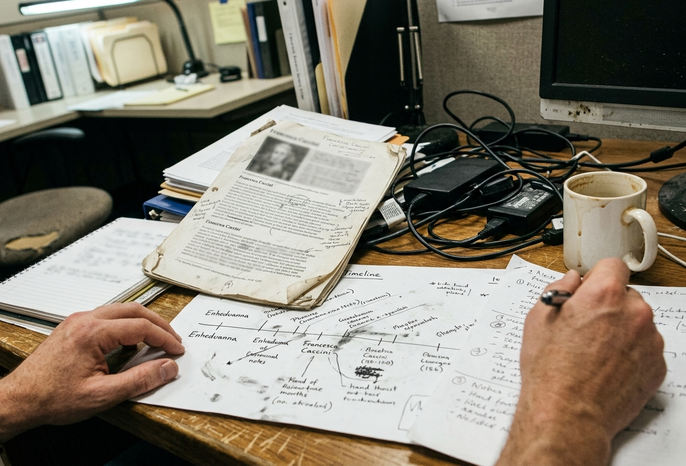
Francesca Caccini, an Italian composer and singer active at the Medici court, marks a decisive shift from monophonic devotional or courtly song toward large-scale professional composition. She was not an accidental survivor of the archive; she was a recognised musician working inside elite cultural machinery.
Her La liberazione di Ruggiero, premiered in 1625, features a complex score requiring at least 16 vocal soloists and a diverse instrumental ensemble. That scale matters. Compared with Enheduanna's ritual texts, Kassia's chant, or Beatritz de Dia's courtly song, Caccini's work demonstrates a different order of coordination: dramatic pacing, vocal distribution, instrumental colour, and staged musical architecture.
This is where my symphonic ear becomes useful, even though we are not yet in the symphonic period. Caccini's handling of large forces anticipates later questions of structure: how to sustain argument, contrast affect, and organise bodies in sound.
Her presence also complicates the easy story that women moved from silence to permission. The record is more uneven than that. Women composed, lost visibility, reappeared through institutional accident, and sometimes commanded major resources.
Continuing the Legacy of Women in Music
From Enheduanna to Francesca Caccini, this timeline traces a long movement from sacred text and ritual authority to chant, courtly song, and professional theatrical composition. It is not a neat ascent. It is a chain of survivals.
The next stage of the work is listening, programming, and teaching with historical proportion. Programming for justice begins when we stop treating women composers as seasonal corrections to a male canon and start placing them where they belong: inside the core narrative of musical development.
This early chronology also prepares the ear for later figures: Florence Price, a woman composer of African descent; Margaret Bonds, another vital woman composer of African descent; Chen Yi, a Chinese composer whose work unsettles narrow national categories; and, in a broader programming ecology, Ulysses Kay, William Grant Still, George Walker, and Adolphus Hailstork as Black male composers whose repertories also challenge inherited concert habits.
Advocacy has begun to move some seasons beyond isolated single performances toward multi-work features, but the deeper task is curricular. A single concert can introduce a name. Repeated study can restore a lineage.
Main Point: This timeline is only the beginning. The practical obligation is to listen actively, cite carefully, and advocate for these foundational works in modern repertoire without forcing them into categories they did not inherit.


Add Your Thoughts