

When 1.24 Percent Defines the Canon
Only 1.24% of works performed by major orchestras during the 2019–2020 season were by Latinx composers, according to the Institute for Composer Diversity. That figure describes more than a narrow repertoire. It reveals how concert institutions repeatedly construct musical history through selection, rehearsal, performance, and omission.
The deficit has particular consequences for Afro-Latinx and Latin American composers. Their orchestral writing may draw on European formal procedures while treating rhythm, articulation, dance, migration, faith, or racial identity through distinct cultural frames. When institutions omit those works, audiences lose access to compositional arguments that complicate the familiar story of Western concert music.
Programming one Latinx work beside a full evening of standard European repertoire may improve the count for a season. It rarely changes the underlying curatorial grammar. The European pieces continue to define scale, seriousness, and stylistic continuity; the isolated Latinx composition bears the burden of representing an immense range of histories.
Sphinx Virtuosi as a Programming Case
Sphinx Virtuosi offers a useful countermodel because the ensemble treats repertoire choice as part of its artistic identity. Its touring practice places musicians from historically excluded communities at the centre of the concert platform while questioning which composers receive sustained preparation and repeated public performance.
This case concerns a specific intervention: centring Latinx and Afro-Latinx repertoire across a touring programme rather than inserting a single representative piece. That distinction matters. A work gains interpretive depth when it sits in conversation with related music, receives adequate rehearsal, and travels to multiple venues. The programme itself then makes an argument about lineage.
The 1.24% Problem
A repertoire gap this severe cannot be addressed through occasional visibility alone. Programming for justice requires enough musical space for comparison, contrast, and sustained listening.
Why the Pan-American Compromise Was Set Aside
During a programming review that ran for several weeks, the curatorial team considered a pan-American format. Standard European works would provide familiarity, while one or two Latinx pieces would introduce the tour’s inclusive premise without placing subscriber retention at perceived risk.
The compromise looked practical on paper. It also preserved the hierarchy the project intended to examine.
A short Latinx work surrounded by canonical European compositions often functions as an excursion. Its rhythmic language may be heard as colour, its cultural references as novelty, and its presence as evidence of institutional goodwill. The audience receives little opportunity to hear relationships among Latinx composers, periods, or aesthetic positions. Musicians face the same restriction: they prepare one unfamiliar idiom briefly, then return to the interpretive habits governing the rest of the programme.
The team discarded that option and centred entire tour programmes on Latinx and Afro-Latinx repertoire. The problem lay in tokenistic scale; the answer involved changing the programme’s structural centre of gravity.
Representation Heard From Within
The artistic reason ran deeper than numerical inclusion. A programme can acknowledge cultural heritage through a title or programme note while leaving its sound world marginal. Sphinx Virtuosi instead gave that heritage temporal weight: rehearsal time, concert duration, interpretive attention, and continuity across venues.

That choice also altered the relationship between performers and repertoire. Musicians whose communities are frequently treated as peripheral within classical institutions could engage with a programme designed around those histories. Cultural identification does not produce automatic interpretive authority, but it can sharpen the questions asked in rehearsal: Where does an accent sit? Which rhythmic layer carries the phrase? Does uniform classical tone clarify the passage or erase its character?
I read the curatorial decision as a change in musical syntax rather than a themed-season gesture. Once Latinx repertoire determines the programme’s internal relationships, familiar canonical works no longer supply the default standard against which every other composition must justify itself.
Building a Latinx String-Orchestra Programme
The tour repertoire joined historical works by Latin American masters with new commissions from living Afro-Latinx composers. This pairing avoided treating discovery as an archaeological exercise. Historical recovery established lineage, while commissioning demonstrated that the repertoire continues to develop through contemporary musical thought.
Balance here concerns function as much as chronology. A curator must consider which work opens the ear, which one can sustain the centre of a programme, and which juxtapositions reveal differences within the broad Latinx category. Shared geography or heritage does not imply a shared compositional language. Instrumentation, rhythmic organisation, formal scale, and the treatment of vernacular materials may diverge sharply.
Rhythm Changed the Rehearsal Plan
Attempting complex Afro-Latinx polyrhythms with string players trained primarily in standard Western European metre creates a practical problem. Conventional ensemble reflexes may encourage players to smooth syncopations, align accents vertically, or shape every line through long-breathed phrasing. Those habits can weaken the friction between rhythmic layers.
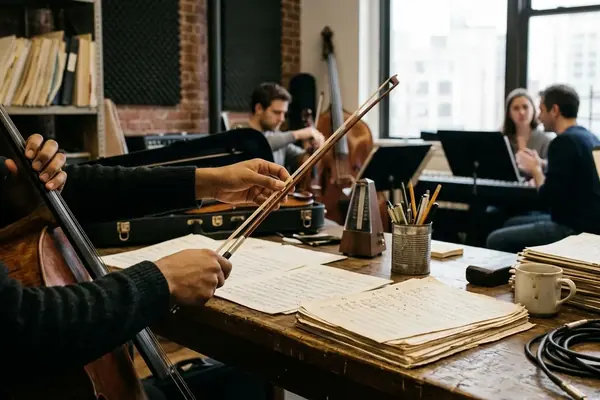
Sphinx Virtuosi’s leadership bypassed standard classical bowing assumptions and brought specialised composers into workshops on string technique. Across roughly two weeks of intensive preparation before the tour launched, each rehearsal devoted about 45 to 60 minutes to rhythmic bowing exercises.
That allocation signals seriousness. Players need time to place accents physically, coordinate bow speed with off-beat attacks, and hear how an individual line participates in a larger groove. Repetition converts an intellectually understood pattern into ensemble muscle memory. Without that work, culturally specific rhythm risks becoming an approximation delivered with polished tone.
Living Composers in the Room
Direct collaboration with living composers shortened the distance between notation and intention. A score can specify tempo, accent, articulation, and dynamics, yet several technically accurate readings may produce very different stylistic results. Composer-led workshops allowed the ensemble to test those options against the work’s rhythmic and expressive premises.
This process does not require performers to imitate a supposedly fixed cultural sound. It asks them to identify which aspects of interpretation carry structural meaning. An accent may organise a polyrhythm rather than decorate it. Clipping a release can preserve momentum. A bowing that appears unconventional within standard string pedagogy may make the phrase intelligible.
Protect the Pulse
Place culturally specific technique in the rehearsal schedule before the first reading. Forty-five to 60 minutes of focused rhythmic work cannot be squeezed into the final run-through.
A Repertoire Audit for Curators
- Calculate the share of past programmes devoted to underrepresented composers using actual performed works, not season themes or publicity language.
- Separate historical recovery from new commissioning so that each receives an explicit curatorial purpose.
- Reserve rehearsal blocks for rhythmic, articulatory, and stylistic features outside the ensemble’s routine training.
- Invite living composers to address interpretive questions that notation alone leaves open.
What a 12-City Tour Can Actually Demonstrate
The resulting programme travelled to 12 cities over roughly 24 to 28 days. That scope matters because touring subjects a curatorial idea to changing halls, presenters, local audiences, and acoustic conditions. A single celebratory concert can attract listeners already invested in its premise. A national itinerary asks whether the repertoire can carry a repeatable concert experience.
Audience reception should be examined with equal care. Demographic shifts depend heavily on whether a venue works with local cultural organisations or relies on its standard subscriber mailing list. The score on the music stand cannot determine who learns about the performance, what ticket barriers they encounter, or whether the venue has built credible relationships with Latinx communities.
Reading Engagement Without Inventing Numbers
The available tour record establishes duration and geographic reach, but it provides no attendance percentages, demographic totals, ticket comparisons, or named audience surveys. Claims about a quantified change in the hall would therefore exceed the evidence at hand. Qualitative assessment can still examine the character of audience engagement through documented responses, post-concert discussion, presenter feedback, and the questions listeners direct to musicians and composers, provided those materials are preserved.

Critical acclaim requires the same discipline. No named review, critic, quotation, or publication accompanies the record consulted here, so attributing praise to a particular outlet would be guesswork. Artistic validation is better grounded in the documented demands of the programme: a national tour, a dedicated rehearsal method, direct composer collaboration, and continued use of commissioned works.
One limit is clear: tour viability does not equal sector-wide reform. A successful Sphinx Virtuosi itinerary demonstrates that a specialised chamber ensemble can prepare and tour this repertoire. It cannot instantly dismantle systemic programming bias or guarantee equivalent box-office outcomes for large symphony orchestras with different cost structures, audiences, and labour requirements.
Even so, the case removes a familiar excuse. Institutions cannot plausibly describe Latinx string repertoire as artistically incoherent or inherently impractical when an ensemble has built a multi-city programme around it and supplied the specialised rehearsal process necessary to perform it persuasively.
Three Commissions That Outlast the Tour
The most transferable feature of the Sphinx Virtuosi model is its alignment of curation, rehearsal, commissioning, and touring. Many institutions address these functions separately. A diversity initiative selects a work, the normal rehearsal allocation remains untouched, and the piece disappears after one performance. Here, repertoire choice affected the preparation method and produced music capable of returning to the active programme.
From Touring Model to Teaching Material
Student and conservatoire ensembles can adapt the same sequence at a smaller scale. They can audit previous concerts, select related historical and contemporary works, schedule focused rhythmic training, and consult composers where access permits. This teaches more than repertoire recognition. Players learn that stylistic accuracy includes metre, articulation, bodily coordination, and knowledge of cultural context.
Availability remains important. A commissioned work cannot influence education if its score and performance materials never move beyond the commissioning ensemble. Repeated touring can help establish practical bowings, identify passages that require sectional attention, and generate informed teaching approaches. Those interpretive resources make later performances more feasible without reducing the work to a standardised reading.
- For orchestras: build inclusive repertoire into the season’s architecture and rehearsal budget.
- For presenters: connect programming with sustained local outreach rather than subscriber communication alone.
- For educators: teach culturally specific rhythmic technique as part of ensemble literacy.
- For commissioners: plan for repeat performance and active circulation when the work is created.
The decisive legacy is stored in playable music rather than in the memory of a themed tour. Sphinx Virtuosi permanently added three newly commissioned Afro-Latinx string-orchestra works to its active touring catalogue.



Add Your Thoughts