

Fragmented Legacies in Institutional Vaults
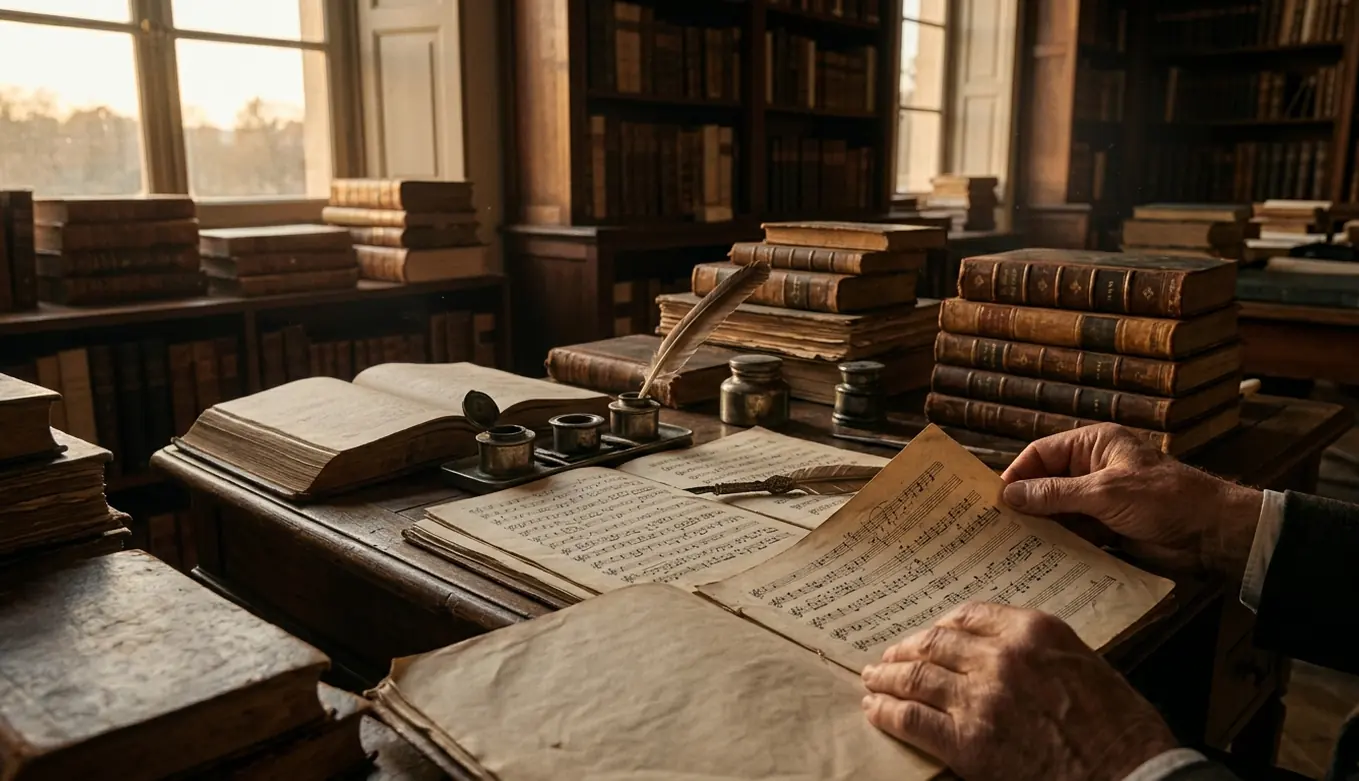
By commonly referenced catalog estimates, fewer than 1 in 10 entries for female composers in historical collections contain complete instrumental parts. The vast majority of pre-Romantic compositions by women survive only as fragmented manuscripts. Countless full works have vanished entirely due to institutional neglect. Actively seeking out the complete, surviving works of these foundational figures requires looking beyond standard repertoire lists. You must engage directly with historical archives to bypass centuries of curation bias.
The physical reality of these documents dictates the pace of discovery. Manuscript fragments often require 12 to 18 months of specialized restoration before digitization can even begin. Acidic ink degrades the parchment over centuries. Water damage obscures critical dynamic markings. This painstaking recovery process is how the music of composers like Élisabeth Jacquet de La Guerre and Marianna Martines returns to circulation. We can actively listen to, source, and understand their surviving works by examining the raw materials they left behind. The archive operates as an active site of musical reclamation.
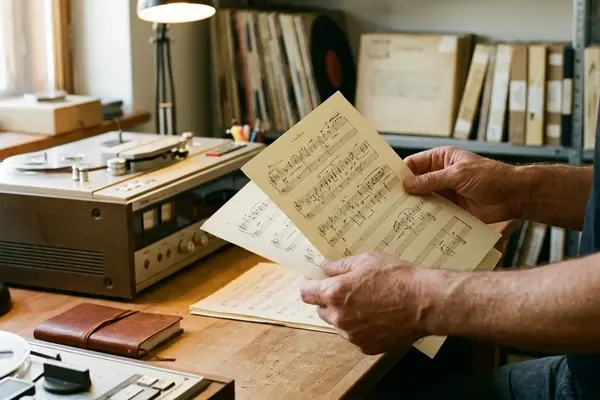
Researchers must reconstruct missing viola lines or decipher faded figured bass notation. This comparative analysis demands a rigorous understanding of period-specific voice leading. You cannot simply guess the missing harmony. You must deduce it from the surviving contrapuntal structures of the era.
Decoding the Harpsichord Suites of Louis XIV’s Court
Early researchers tried to force the unmeasured prelude, with its spatial notation, into rigid 4/4 time to accommodate modern players. This approach stripped the music of its improvisatory essence. The rigid barlines suffocated the rhythmic autonomy that defined the era. Editors ultimately discarded the measured transcriptions. They chose instead to publish facsimiles with spatial notation guidelines. This decision preserved the performer's freedom to interpret the physical distance between notes as time. The visual layout of the ink on the page directly translates to the temporal pacing of the performance.
Jacquet de La Guerre held a unique, highly respected position in Louis XIV's court. Her harpsichord suites, composed between 1687 and 1707, demand a deep understanding of French Baroque stylistic markers. You must listen for specific, complex ornamentation. Combinations of the port de voix and pincé can occupy 3 to 5 beats in her slower sarabandes. Recognizing these dense ornamental structures helps listeners evaluate the authenticity and quality of historically informed performances.
The density of the trills and appoggiaturas forms the structural architecture of the harmony. They function as load-bearing pillars of the tonal progression, not mere decorative additions. Dissonance created by a delayed resolution generates the emotional tension characteristic of the French style. Mastering this tension shapes any interpretation of her keyboard works. The performer must lean into the dissonance before allowing the harmony to resolve.
The Galant Architecture of a Viennese Master
Marianna Martines operated as a prolific, highly influential composer of large-scale choral works and keyboard sonatas. History frequently reduces her to a mere host for Mozart and Haydn. Her surviving manuscripts reveal a master architect of the elegant galant style. Choral scores spanning 40 to 60 pages demonstrate her command of complex vocal polyphony and orchestral integration. These manuscripts, dating between 1760 and 1773, showcase a sophisticated harmonic language that rivaled any of her Viennese contemporaries. She constructed massive sonic structures using precise, transparent voice leading.
Studying her complete output presents distinct logistical hurdles. Accessing Martines's instrumental concertos requires specialized credentials for private university archives, restricting the availability of commercial recordings to those with institutional backing. Her large-scale vocal works and masses remain well-documented and accessible. Listeners can trace her development through these choral compositions. The galant phrasing emphasizes clear melodies over light accompaniment. You can hear this clarity in the precise articulation of the string sections in surviving recordings.
The archival reality dictates the narrative. The sheer volume of her output demands a reevaluation of the Classical era's structural hierarchy. Her masses require a massive double choir and a full complement of brass and timpani. The interplay between the soloists and the ripieno sections highlights her deep understanding of acoustic space.
Sourcing Authentic Period Interpretations
Building a library of pre-Romantic women composers requires strict criteria for historical accuracy. You must find ensembles that utilize period instruments to capture the intended timbres of the era. Modern symphonic instruments project a brilliant, aggressive tone that overwhelms the delicate interplay of Baroque and Classical counterpoint. The physical construction of historical instruments dictates a completely different approach to articulation and phrasing.
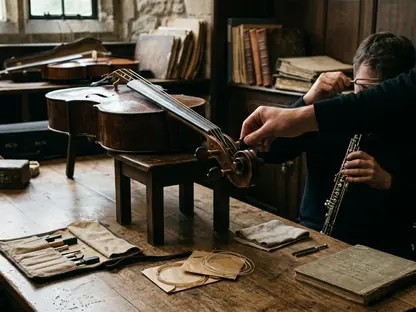
Tuning to A=415 Hz, the period pitch standard, fundamentally alters the resonance of the music. String instruments tuned to this lower pitch produce a warmer, more resonant sound. This tuning aligns with the physical construction of historical harpsichords and gut-stringed violins. The lower tension on the strings allows for a richer overtone series. This acoustic reality changes how the harmony interacts within the performance space. It brings the listener closer to the weight these compositions carried in their own time.
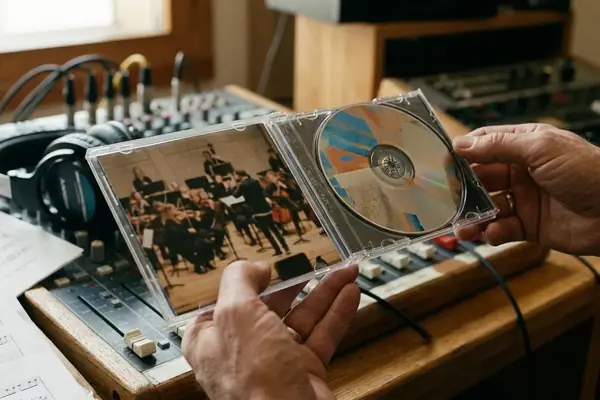
Seek out independent labels dedicated to unearthing forgotten classical archives. These organizations invest heavily in editorial standards. You will often find album liner notes exceeding 15 pages of editorial commentary. This documentation provides crucial context for the performance decisions. The notes detail the specific tuning temperaments, the provenance of the instruments, and the rationale behind ornamental choices. Cross-reference these recordings with surviving public domain manuscripts to verify the structural integrity of the performance.
Essential Criteria for Evaluating Historically Informed Recordings
- Verify the ensemble uses period instruments tuned to historical pitch standards (e.g., A=415 Hz for Baroque).
- Check liner notes for citations of specific archival manuscripts rather than modern composite editions.
- Confirm the presence of era-appropriate ornamentation practices, such as spatial notation interpretation.
Striking the First Unmeasured Chord
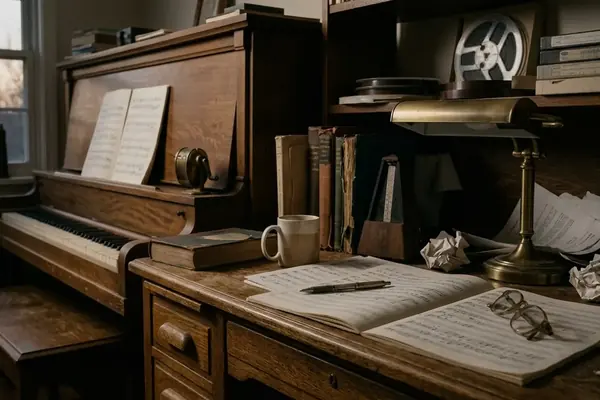
The heavy parchment measures roughly 24 by 32 centimeters. It rests on the wooden music desk of a double-manual harpsichord. This 1687 first edition facsimile of Jacquet de La Guerre's Pièces de clavessin is printed on 120-gram cotton paper. The rough texture of the page catches the low light of the practice room. The thick black ink of the spatial notation spreads across the staff without a single barline to dictate the flow of time.
A musician traces the arc of a port de voix with one finger, feeling the physical weight of the historical document. The hands move to the keyboards. The fingers depress the keys, striking the first unmeasured chord. The quill plectrum plucks the brass string. A resonant, complex harmony fills the space. The historical voice breathes again in the vibration of the soundboard.



Add Your Thoughts