

Keeping Florence Price on the Syllabus After the Broadcast Ends
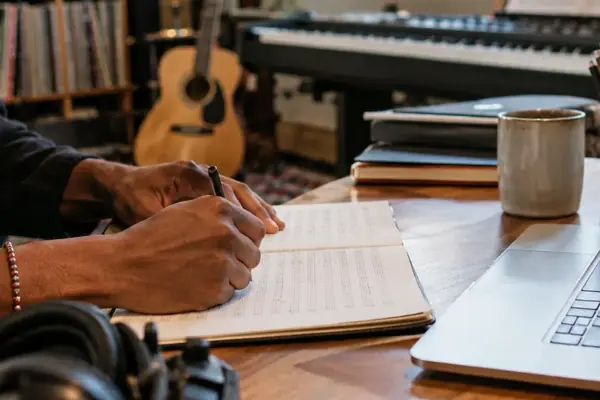
The final chord of Florence Price’s Symphony No. 1 fades from a late-night classical broadcast. A listener reaches for a notebook, trying to catch the recording’s catalog number before the presenter speaks over the applause. By morning, the page contains a composer’s surname, an incomplete ensemble name, and a compelling reason to listen again.
Thematic radio programs and curated playlists create these encounters with women composers and composers of color. Presenters bring unfamiliar repertoire into conversation with established works; their selections offer starting points for sustained study. Familiarity, however, requires a repeatable route back to the music.
A semester-long listening syllabus can begin with a two-pass listening log. During the broadcast, capture the work, performers, program title, and playback location. Within 48 hours, expand that entry into a teaching profile: historical context, recording access, structural landmarks, and a question worth returning to. The same framework serves university appreciation seminars and independent listeners.
Turning Broadcast Tracklists Into Teachable Repertoire
A discovery playlist rewards breadth; a teaching collection requires dependable access and purposeful selection. Keep both, with separate records. Otherwise, every intriguing broadcast discovery becomes another assignment competing for the same week.
- Capture the episode record. Save the broadcast date, episode title, tracklist, and show-note link. Distinguish the presenter’s commentary from the recorded performance.
- Verify the work and recording. Check movement titles, performers, conductor where applicable, label, catalog information, and release year against the recording documentation.
- Check listening access. Locate the recording through commercial or institutional services and identify an alternative route. Record whether students need a library login or subscription.
- Attach historical documentation. Retain relevant liner notes or scholarly writing alongside the entry. Identify which passages support a discussion of composition, performance, or reception.
- Select a teachable span. Prefer movements with audible boundaries, distinctive textures, or recognizable thematic returns that support close comparison.
The tracking sheet should include composer life dates, composition year, instrumentation, ensemble, label, release year, exact movement duration, and a persistent audio link. Add separate fields for broadcast timestamps and score location. A movement’s duration helps balance workload; its timestamp helps everyone find the same passage.
Promote a work into the core syllabus when access, context, and a clear listening task align. Keep other discoveries in reserve for student projects or later course revisions.
Placing Underrepresented Composers Within Musical History
A 14-week course can distribute its historical attention across three weeks of Early and Baroque music, three of Classical and Early Romantic repertoire, four of Late Romantic and Early Modern music, and four of post-war and contemporary work. These are planning allocations, with individual works placed by composition date.
That structure integrates underrepresented composers into the stylistic questions the course already asks. Francesca Caccini belongs within an examination of early musical institutions and patronage. Chevalier de Saint-Georges belongs within Classical instrumental study. Margaret Bonds and Julius Eastman provide routes into different twentieth-century musical practices.
Carry Institutional Questions Across Eras
Use patronage, exile, and vernacular idioms as recurring thematic threads. A question about who financed performance can reappear across otherwise distant repertoire. Follow the evidence attached to each work rather than assigning every composer the same account of exclusion.
Programming for justice becomes a curricular practice when students encounter these composers throughout the historical sequence and receive sustained opportunities to analyze their music.
Budget 45 to 60 minutes of primary audio each week: a 25-to-35-minute anchor work and two comparative excerpts of 8 to 12 minutes each, selected so their combined duration stays within the budget. Check the actual recording before finalizing the assignment. A complete symphony, suite, or vocal sequence can supply the anchor; the comparisons should sharpen a particular question about form, texture, or musical language.
Connecting Broadcast Timestamps to Score Landmarks
A timestamp and a measure number answer different practical questions: where to listen, and where to look. Put them beside each other in the guide, followed by a brief description such as “opening texture returns” or “melody passes into another instrumental group.”
Begin the score search with publisher perusal copies, composers’ websites, library catalogs, and public-domain repositories. The Library of Congress Performing Arts Digital Collections provides another starting point for locating digitized performing-arts materials. Verify the work, version, and edition against the assigned recording, and check reproduction permissions before distributing excerpts.
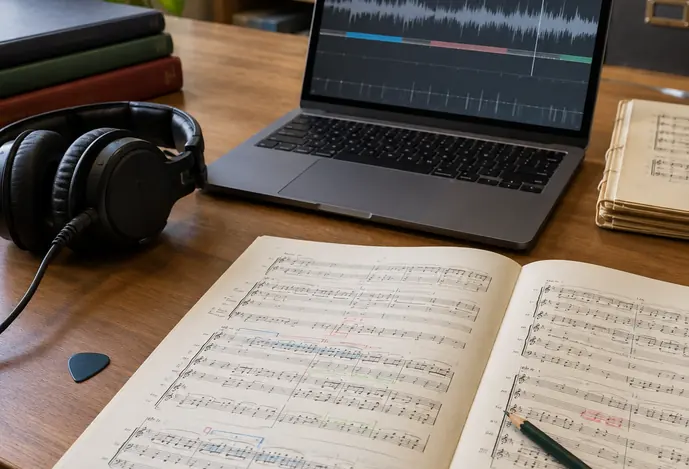
Prepare two annotation layers. The first identifies audible events: entrances, changes of texture, cadences, and thematic returns. The second adds measure numbers, rehearsal letters, and analytical vocabulary. Non-majors can follow the first layer while advanced students investigate how the notation produces those events.
For a ten-minute passage, six to eight carefully chosen landmarks make a manageable teaching guide. Select consequential moments rather than marking every change.
When a usable score remains unedited or locked in a non-circulating archive, replace visual harmonic analysis with timestamped structural mapping by ear, including for selections by Caccini, Saint-Georges, or Eastman.
Asking Seminar Questions That Return Students to the Music
“How did this composer overcome adversity?” directs discussion toward biography before students have described a musical event. A more productive prompt begins with a short passage, requests an observation, and then introduces a historical question.
Ask students to identify the recording and timestamp in every response. This makes interpretive disagreements easier to examine: the seminar can replay the passage and distinguish what is audible from what requires documentary support.
Three Prompts for Close Listening
- Compare instrumental choices: Select a 30-to-90-second passage from each assigned work. Which instruments carry the principal material, and how does the accompaniment shape its prominence? Relate the difference to the documented performing forces.
- Investigate a performance gap: Build a chronology from the premiere toward the modern broadcast. Identify a documented interruption in performance or circulation, then examine the roles of publication, programming, and institutional access.
- Examine performance practice: Compare the same passage in two recordings. Describe differences in tempo, articulation, balance, or vocal delivery. Which interpretation most clearly supports the structural reading developed in class?
Assess the specificity of the listening evidence and the quality of the connection to context. Students should be able to disagree about interpretation while locating the same musical event.
Teaching Price, Still, and Bonds Across Three Weeks
This block connects American symphonic and vocal repertoire through Florence Price, William Grant Still, and Margaret Bonds. Place each work accurately on the course chronology while using the block to compare vernacular idioms, orchestral texture, and reception.
For each week, prepare the selected broadcast performance, a four-to-six-page score excerpt, and a timestamp sheet. Schedule three listening sessions of 15 to 20 minutes on Monday, Wednesday, and Friday. Divide longer works at movement boundaries; use the remaining audio allocation for the comparative excerpts. Reserve separate preparation time for reading and a 200-to-250-word response.
Price: Symphony No. 1 and the Juba Dance
Monday: Begin the complete symphony assignment, listening without annotation. Wednesday: Continue the symphony and track the third movement, “Juba Dance,” against the score. Friday: Complete the assigned audio and compare two excerpts from the surrounding movements.
Pair the broadcast’s third-movement segment with score pages covering its opening texture and a later return. Record both broadcast and movement-relative timestamps. Seminar question: how do rhythmic repetition and changing orchestral color establish the movement’s character within the symphony?
Still: The Afro-American Symphony
Monday: Begin William Grant Still’s Symphony No. 1, “Afro-American,” following complete movements. Wednesday: Finish the symphony and trace a recurring melodic idea. Friday: Compare selected Price and Still passages, focusing on melody and accompaniment.
Pair the broadcast movements containing that idea with score excerpts showing its initial statement and return. Ask: what changes in scoring, rhythm, or placement alter its function across the work?
Bonds: Three Dream Portraits and Montgomery Variations
Monday: Hear Three Dream Portraits and begin Montgomery Variations. Wednesday: Complete the orchestral work and follow the selected score pages. Friday: Revisit comparative excerpts, distinguishing the shaping of a sung phrase from the treatment of an orchestral idea.
Pair the broadcast song sequence with a vocal-score passage and the orchestral segment with a clearly audible variation boundary. Ask students how text guides their hearing in the songs, then require equally precise musical evidence for their reading of the orchestral passage.
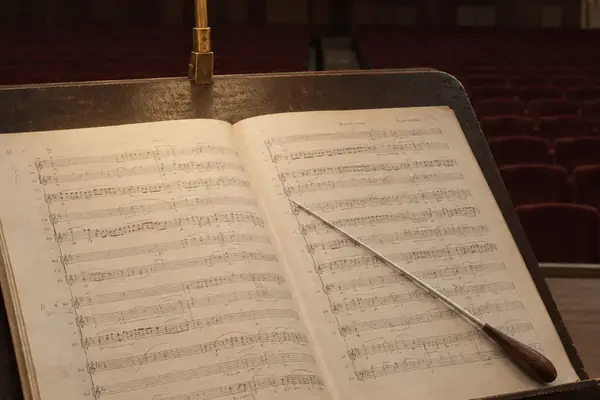
On Sunday evening, the Price score lies open at “Juba Dance.” The instructor cues the saved broadcast timestamp, follows the violin line into the texture, and pencils a mark beside the syncopated cadence. Monday’s opening question waits in the margin.
Add Your Thoughts