
A Revival Begins with the Parts on the Librarian’s Desk
Usable performance materials make a neglected vocal work programmable. For an orchestra considering a historical woman composer or another underrepresented voice, the first practical barrier is often physical: someone must produce legible orchestral parts and a piano-vocal score before rehearsals can begin. Audience development belongs in the plan; so does the substantial editorial labour that gives musicians something to rehearse.
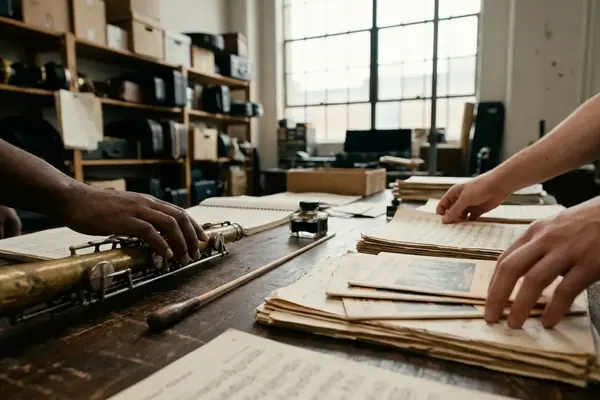
Compare an established symphonic rental packet with an autograph full score held in an archive. The rental supplies separate instrumental parts, coordinated rehearsal references and materials ready for distribution. The manuscript preserves the composition, but every player’s part still needs extracting, checking and preparing. A conductor’s enthusiasm cannot compress those tasks into the interval between announcing a season and opening rehearsals.
I would therefore put a materials audit before the programming announcement. Establish what survives: full score, instrumental parts, vocal materials and any evidence of revisions. Identify who will prepare the edition and who will approve its musical decisions.
The distinction between an overture and a multi-act vocal work matters here. An overture concentrates preparation within the orchestra. A dramatic cantata or opera also sets separate clocks running for soloists, chorus master and language coaches. Their study materials must circulate months before the first orchestral downbeat.
Editing the Manuscript for Players and Singers
A soprano C-clef, a historical horn transposition and an incomplete passage of choral underlay pose different editorial questions. Reading the pitches correctly solves only part of the problem. The editor must also establish which instrument sounds them, how the words align and whether surviving parts preserve a revision absent from the full score.
The working sequence begins with transcription into modern notation software, followed by comparison between the composer’s score and surviving manuscript parts. Discrepancies need musical decisions and a record of those decisions. A modernized transposition should remain consistent across the conductor’s score and the relevant instrumental part; an unresolved difference should reach the editor before it reaches rehearsal.
The piano-vocal reduction needs its own delivery deadline. Singers require a playable representation of the orchestral harmony, entries and dramatic pacing. Extracted vocal staves leave the accompanist without the musical context needed to support preparation. Creating that reduction requires judgment about texture and playability, alongside careful checking of text underlay.
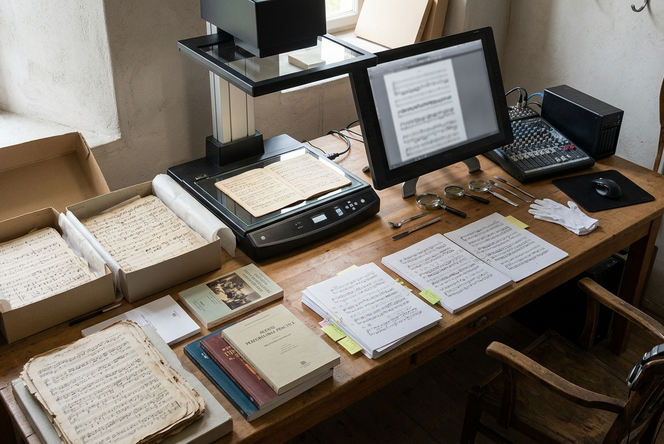
Once the instrumental parts exist, the concertmaster and principal strings need time to coordinate bowings. Rehearsal letters, rests and page turns require checking across the set. These details determine whether a conductor can restart a difficult ensemble passage cleanly or must stop while musicians reconcile conflicting references.
I would treat folder distribution as an editorial handover: the materials should already support rehearsal. Every ambiguity settled at the desk preserves collective rehearsal time for phrasing, balance and ensemble.
Budgeting the Preparation Before the Orchestra Assembles
An unfamiliar chromatic score puts pressure on a short orchestral rehearsal schedule. Players may need to establish harmonic direction, rhythmic coordination and vocal cues without an existing performance tradition in their ears. A chorus learning dense polyphony faces a separate preparation task, especially when no commercial recording provides an aural reference.
For planning purposes, draw a firm distinction between an overture assigned a four-service orchestral cycle and a vocal revival given a fourteen-week choral preparation window. The latter requires the piano-vocal score, accompanist and chorus master long before those orchestral services begin. Compressing both projects into the same calendar conceals the vocal workload.
Build the budget around the actual score:
- Editorial preparation: transcription, source comparison, piano reduction, part extraction and corrections.
- Vocal preparation: soloist learning fees, musical coaching, language work and extended chorus rehearsals.
- Additional forces: extra percussion, offstage brass and other personnel specified by the work.
- Rehearsal allocation: sectional readings, full-orchestra calls and orchestral rehearsals with singers.
A dedicated string reading can address dense passagework and test newly engraved page turns before the full ensemble assembles. Wind and brass sectionals can isolate transposition questions, articulation and internal balance. Choose these calls according to the score’s demands, then protect tutti time for coordination between forces.
A consortium can share the cost of engraving and agreed soloist preparation across participating ensembles. Before contracting, partners should align their choral forces and approach to historical instrumentation, because incompatible requirements can undermine the shared edition. Specify who owns the files, who authorizes revisions and how corrected materials reach the next orchestra.
Giving the Drama Space on a Concert Platform
A theatrical production places singers within a designed dramatic world; a concert presentation exposes the relationship between voices and orchestra more directly. Each changes how the audience encounters the score. Full staging entails pit placement, sets, costumes, a directorial concept and memorized action. A semi-staged revival can concentrate resources on musical preparation while retaining purposeful movement.
The symphonic stage makes orchestral detail available to the audience without the filtering effect of a pit. That visibility is particularly valuable when listeners are encountering a composer’s orchestration for the first time. It also makes balance an active production decision: the conductor must hear how orchestral weight meets the singers’ projection in the chosen layout.
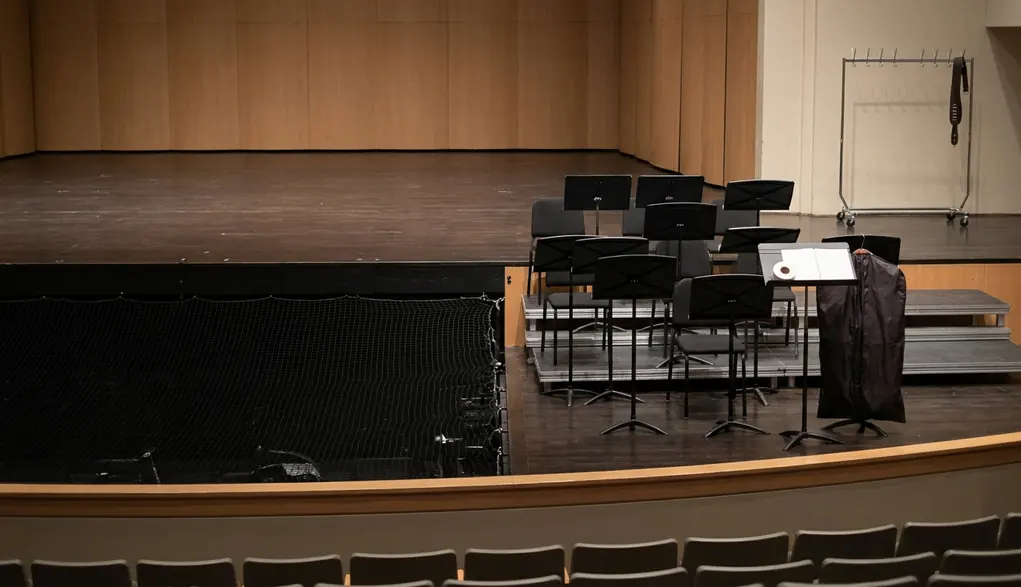
Raised soloist platforms can clarify who addresses whom. Entrances from the chorus wings can distinguish an arrival from an internal reflection. Targeted lighting can focus attention, while supertitles carry the text without requiring elaborate scenery. Place music stands so singers retain a clear relationship with the conductor and one another.
For an initial revival, I would favour semi-staging when it lets the singers use scores and keeps the orchestration audible. The dramatic plan should follow the work’s exchanges, confrontations and changes of scene. Each movement across the platform needs a musical reason.
Taking a Three-Act Opera from Archive to Concert
Hypothetical example: you choose a neglected three-act concert opera by a historical woman composer. An autograph full score survives, and your orchestra plans a semi-staged performance. Work backwards through a twenty-four-month schedule, with separate deadlines for vocal learning and instrumental preparation.
Months 24–19: Secure Access and Define the Edition
Arrange archive reproduction permissions and clarify permission to prepare, perform and record the edition. Commission transcription and source comparison. Agree on notation, historical transpositions and the treatment of discrepancies. Bring a sister orchestra into the project now, while the editorial scope and shared costs can still be settled together.
Months 18–15: Release the Vocal Learning Materials
Set month 18 as the piano-vocal delivery deadline. Give the chorus master and soloists a checked score with consistent rehearsal references and usable underlay. They can begin musical and language preparation while instrumental editing continues. Keep a controlled correction list so everyone knows which version they are using.
Months 14–7: Extract and Prepare the Orchestral Parts
Continue checking the full score and extracting parts. At month 10, send the string parts to the concertmaster for bowing review: this places their handover eight months after the piano-vocal score leaves the copyist’s desk. The gap serves distinct tasks. Singers gain sustained learning time; string leaders receive parts ready for practical scrutiny. Reconcile bowings, rehearsal references and page turns before folder distribution.
Months 6–1: Rehearse, Record and Correct
Within this final period, reserve the fourteen-week choral preparation window already budgeted. Schedule sectionals before tutti calls, then add the soloists and chorus for ensemble work. Use the agreed platforms, lighting and supertitles during dress rehearsals so musical and dramatic cues develop together.
Arrange a live archival recording of the concert and patch material during the dress rehearsal, with the necessary permissions. After the performance, collect marked parts, resolve the corrections and enter them into the master files. Deposit the corrected score, piano-vocal reduction and orchestral parts in a lending repository under agreed access terms. Your sister orchestra then receives a coordinated performance set, with the first production’s rehearsal corrections already incorporated.




Add Your Thoughts